
Cell specifications |
||||||||||||||||||||||||||||||||||
| Starna®
spectrophotometer cells and other complex quartz assemblies, unless
precluded by design, are assembled using a fully fused method of
construction. This technique, pioneered by Optiglass personnel,
ensures that cells are fused into a single homogeneous piece using
heat alone, without intermediate bonding materials. All cells are
carefully annealed to remove any possible remnants of strain after
the fusing process, ensuring that cells achieve maximum physical
strength as well as resistance to solvents. With few exceptions,
cells can be used safely with pressure differentials of up to 3
x 105 Pa (three atmospheres).
(see MSDS) |
||||||||||||||||||||||||||||||||||
| General specifications | ||||||||||||||||||||||||||||||||||
| Windows
parallel to: Window flatness to: Window polish, standard: Window polish, laser: |
better
than 3 minutes of arc better than 4 Newton fringes 60/40 scratch/dig 20/10 scratch/dig |
|||||||||||||||||||||||||||||||||
| Material | Path lengths | Tolerance | ||||||||||||||||||||||||||||||||
|
Glass
|
less
than 10mm 10 to 30mm 40 to 100mm up to 20mm 30 to 100mm 0.01 to 0.05mm 0.1 to 0.4mm 0.5 to 100mm |
±
0.02mm ± 0.1mm ± 0.2mm ± 0.01mm ± 0.02mm ± 0.002mm ± 0.005mm ± 0.01mm |
||||||||||||||||||||||||||||||||
|
Standard
window thickness is 1.25mm, polished to better than 4 Newton Fringes
per centimetre in the viewing area, typically flat to better than
1 micron (0.001mm) over the window area. |
||||||||||||||||||||||||||||||||||
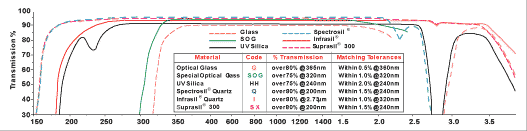
| Window material transmission properties | ||||||||||||||||||||||||||||||||||
|
||||||||||||||||||||||||||||||||||
| Registered
Trade Marks: INFRASIL® & Suprasil® 300 Heraeus Quarzglas
GmbH, Hanau / Main, Germany. SPECTROSIL®, Thermal Syndicate, England. Borofloat® Corning Glass Works, U.S.A. The above information illustrates the approximate transmission ranges of the guaranteed materials used in the production of Starna cells. The traces are for a thickness of 5 mm, which is approximately double the total thickness of the windows that are used in the construction of most cells. |
||||||||||||||||||||||||||||||||||
| Material specifications | ||||||||||||||||||||||||||||||||||
| Starna Scientific offer the following window materials: Optical Glass (G), Special Optical Glass (SOG), & Borofloat® (PX) for the Visible range; UV Silica Quartz(HH) for UV; Spectrosil® Quartz (Q) or equivalentfor FarUV & Visible, Infrasil® Quartz (I) or equivalent for UV through Near Infra-red (IR); Suprasil 300® Quartz (SX) or equivalent for FarUV through Near IR.. If a specific window material is required and is not shown in this catalogue please contact us for availability. |
||||||||||||||||||||||||||||||||||
| The following table shows the Usable Range (UR) and the range over which the transmission is guaranteed better than 80%. | ||||||||||||||||||||||||||||||||||
|
||||||||||||||||||||||||||||||||||
| For
fluorescent applications Spectrosil® is the recommended window
material, as it does not exhibit any background fluorescence. Some
other materials, especially glass and lower grades of quartz may have
some background fluorescence. The meticulous care taken in the quality of the polishing and unique construction of regular Starna® quartz fluorescent cells brings them within tolerances which are sufficiently stringent for them to be used in laser applications. These techniques are particularly relevant in the manufacture of much larger Ultra High Vacuum (UHV) cells. |
||||||||||||||||||||||||||||||||||

Cells Reference materials other products Mirrors Prisms lenses coatings